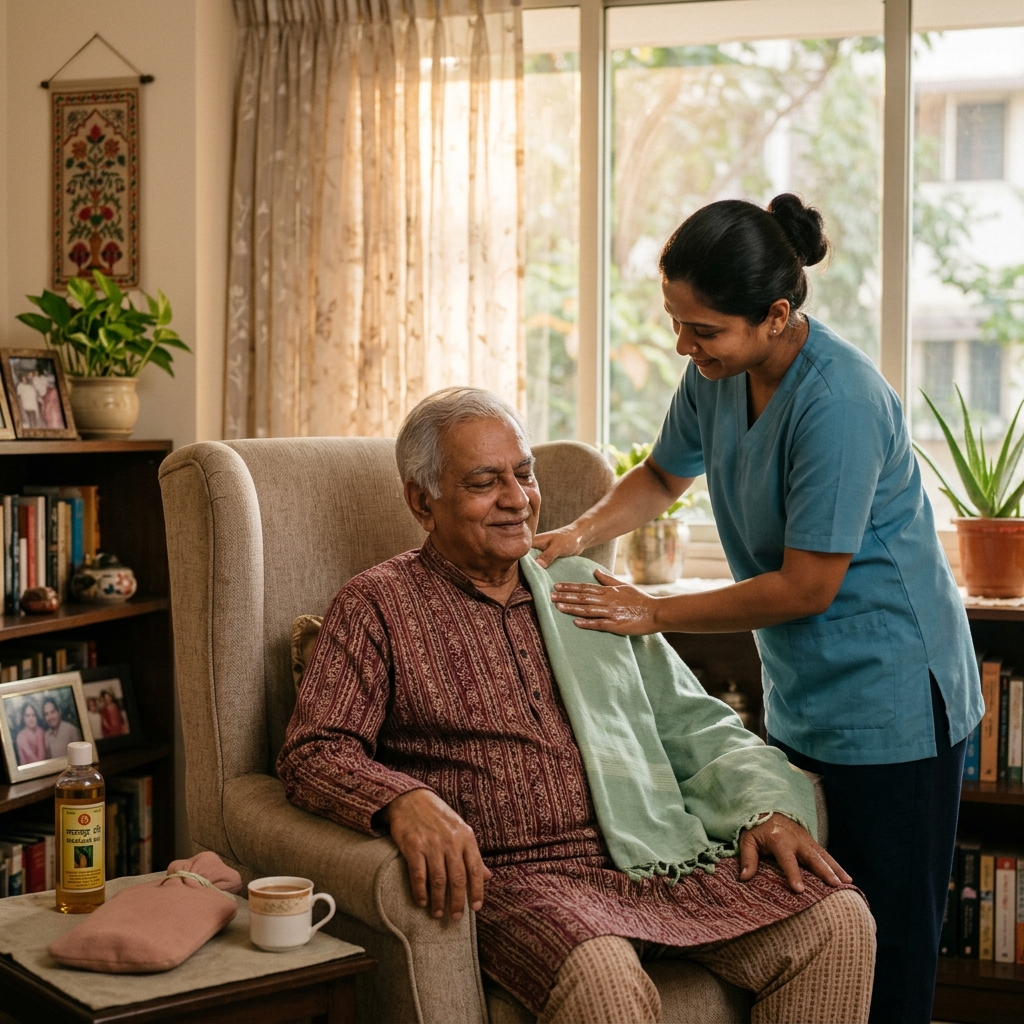
Chronic pain is a reality for many elderly individuals, stemming from conditions like arthritis, neuropathy, or old injuries. While prescription medications are often necessary, they can come with heavy side effects like severe drowsiness, constipation, or confusion. Therefore, integrating non-medical, complementary pain management strategies into the daily routine is crucial for improving a patient's overall quality of life.
Temperature therapy is one of the oldest and most effective methods. Heat therapy, using warm compresses or a heating pad, is excellent for soothing stiff, aching joints and relaxing tense muscles. Conversely, cold therapy using ice packs is highly effective for numbing sharp pain and reducing acute inflammation or swelling.
Gentle movement is paradoxically one of the best treatments for pain. While the instinct is to stay completely still, inactivity causes joints to stiffen further. A Caretaker can assist with very gentle, doctor-approved range-of-motion exercises or short, slow walks around the living room to keep the blood flowing and joints lubricated.
Distraction and relaxation techniques play a massive role in pain perception. Engaging the patient's mind with a favorite hobby, listening to calming music, or practicing guided deep-breathing exercises can actively shift their neurological focus away from the pain signals.
Finally, ensure the physical environment is highly supportive. A supportive mattress, ergonomic chairs, and proper positioning in bed using supportive pillows can relieve pressure points and significantly reduce ambient daily discomfort.
Key Takeaways
- Utilize heat pads for stiff, aching muscles and ice packs for sharp pain and inflammation.
- Encourage gentle, assisted movement to prevent joints from stiffening further.
- Use deep breathing, music, and engaging hobbies to distract the brain from pain signals.
- Invest in supportive pillows and ergonomic seating to reduce daily physical strain.