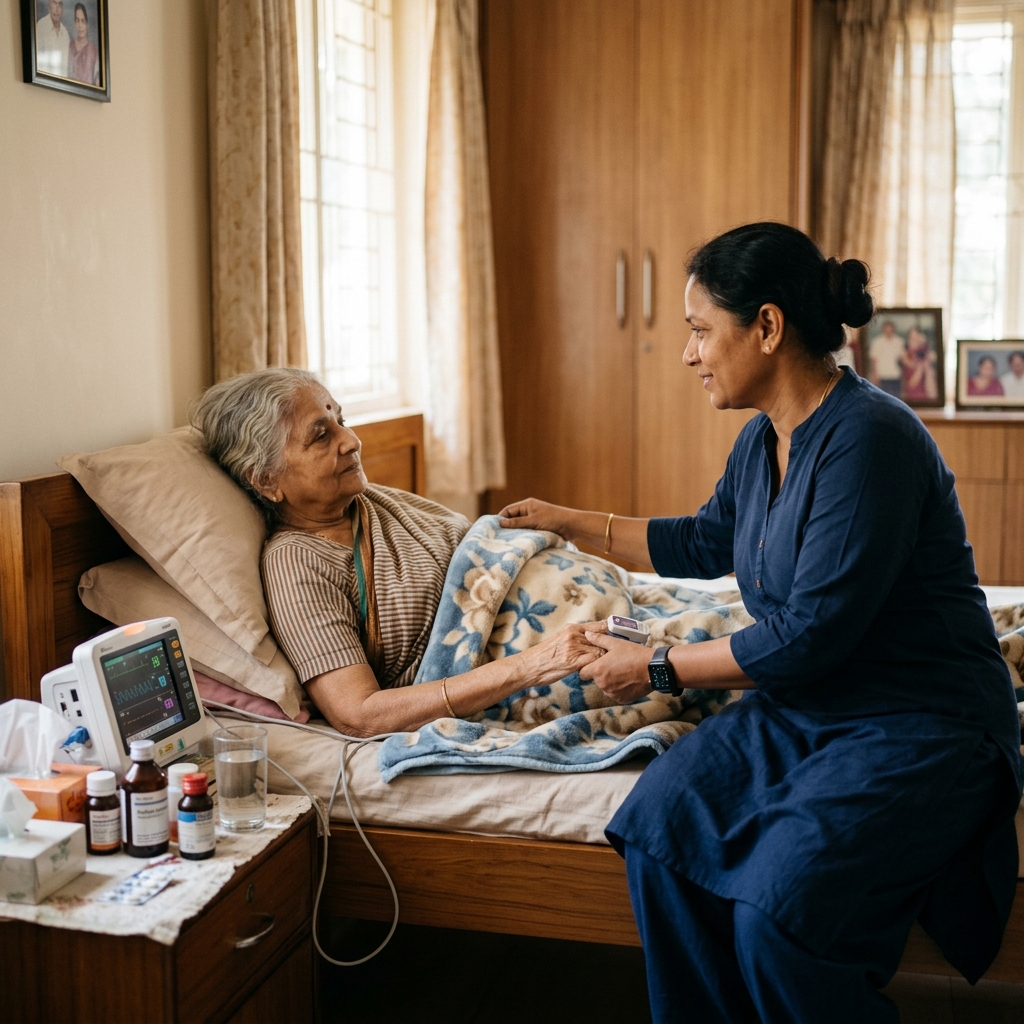
When a patient becomes completely bedridden due to illness, stroke, or severe injury, the dynamics of care shift dramatically. It is no longer just about assisting with daily tasks; it becomes about constant, vigilant monitoring to prevent the severe complications that arise from total immobility. In these scenarios, 24/7 care is not a luxury; it is a medical necessity.
The most immediate and dangerous risk for a bedridden patient is the development of pressure ulcers, commonly known as bedsores. When a person lies in one position for too long, the pressure cuts off blood circulation to the skin, causing the tissue to die. A trained Caretaker must physically turn and reposition the patient every two hours, day and night, to prevent this.
Respiratory issues are another silent threat. Fluid can easily pool in the lungs of a patient who lies flat constantly, leading to severe pneumonia. Caretakers must regularly elevate the patient's head, encourage deep breathing exercises, and monitor for any signs of a persistent cough or shallow breathing.
Hygiene in a bedridden state requires meticulous attention. Incontinence must be managed immediately to prevent severe skin breakdown and infections. Daily sponge baths and meticulous changing of linens are required to keep the environment sanitary and the patient comfortable.
Finally, the psychological impact of being bedridden is immense. Having a Caretaker present 24/7 provides crucial human interaction, reduces feelings of intense isolation, and ensures that the patient always has someone to respond instantly to their needs or signs of distress.
Key Takeaways
- Bedridden patients must be repositioned every two hours to prevent deadly bedsores.
- Caretakers must monitor breathing and elevate the head to prevent fluid buildup in the lungs.
- Immediate management of incontinence is required to prevent severe skin infections.
- 24/7 presence provides essential psychological comfort and immediate emergency response.