
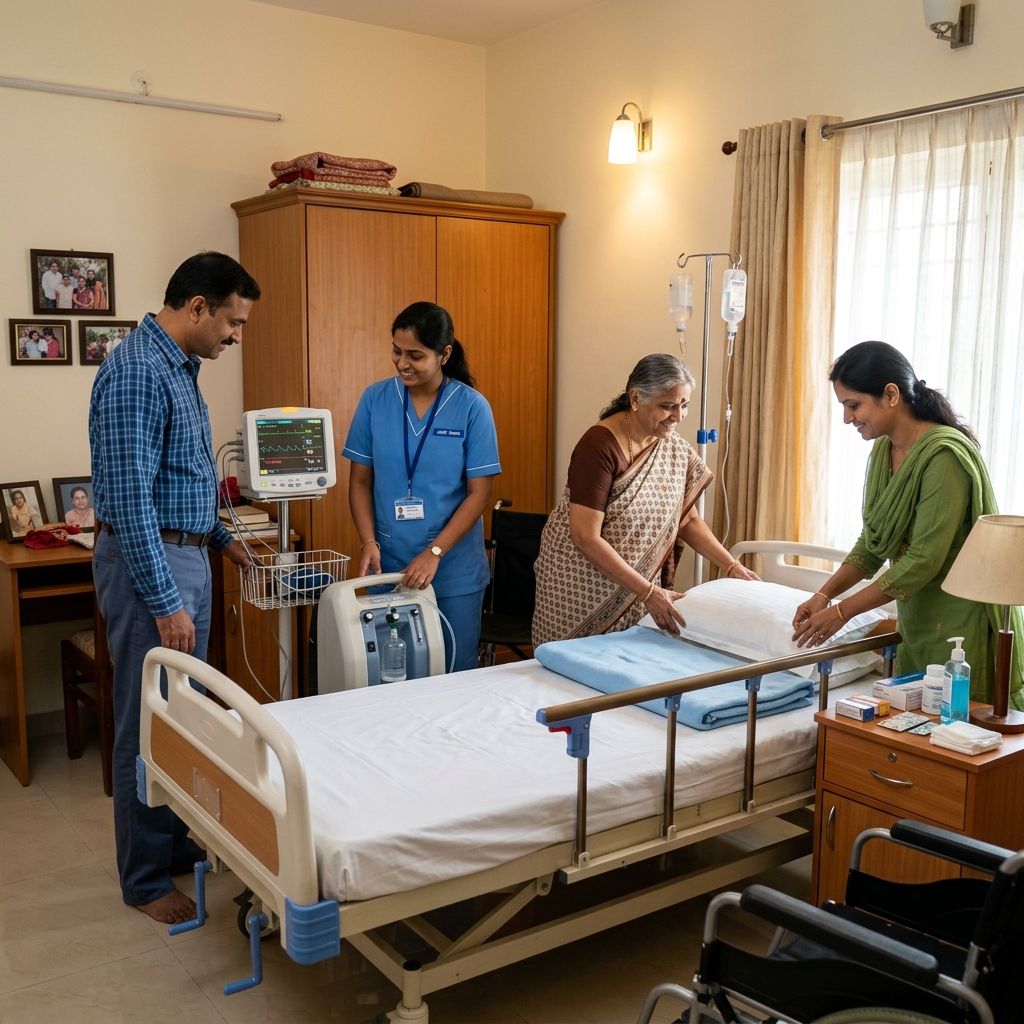
The day a loved one is discharged from the hospital is often a mix of relief and intense anxiety. The transition from a fully staffed medical facility to a private home can be jarring if the family is not fully prepared. A successful discharge requires proactive planning days before the patient actually leaves the hospital ward.
The absolute most important step is fully understanding the discharge summary. Before you leave the hospital, insist on a sit-down conversation with the discharging nurse or doctor. You need to know exactly what medications need to be taken, at what times, and what the potential side effects are. Do not leave until you are confident you understand the schedule.
Next, assess the home environment. Will the patient be able to climb stairs? If not, a temporary ground-floor bedroom must be arranged. Do you need a wheelchair, a walker, or a commode chair? Arrange for these medical equipment rentals well in advance so they are set up before the patient arrives.
Determine who will be providing the immediate care. If family members have to work, you cannot leave a freshly discharged patient alone. This is the time to arrange for a professional home nurse or Caretaker to bridge the gap during those critical first few weeks.
Finally, establish a clear emergency plan. Know exactly who to call�the surgeon, the general practitioner, or an ambulance�if specific symptoms arise, such as a sudden fever, increased pain, or bleeding. Having this plan written down reduces panic in a crisis.
Key Takeaways
- Demand a clear, detailed explanation of all medications and care instructions before leaving the hospital.
- Prepare the home physically by arranging a ground-floor room and renting necessary medical equipment.
- Arrange for professional home care in advance if family members cannot be present 24/7.
- Write down a clear emergency action plan detailing who to call if complications arise.