
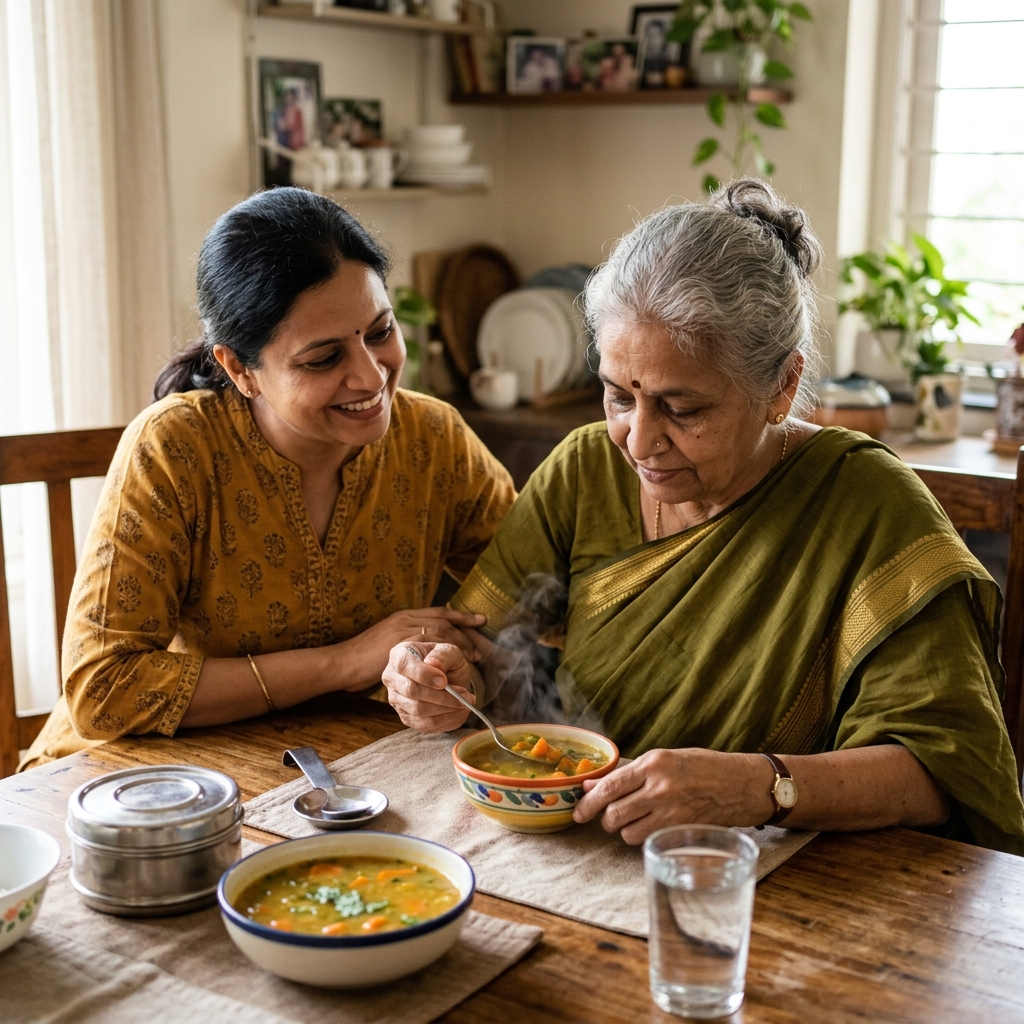
One of the most stressful things for a family caregiver is watching an aging parent refuse to eat. You spend time cooking a nice, healthy meal, only for them to take two bites and say they are full. Before you get frustrated, it is important to understand that this usually isn't stubbornness. There are real, physical reasons why food loses its appeal as we age.
First, check their mouth. Dental issues are a massive culprit. Dentures that don't fit right anymore can cause painful sores on the gums, making chewing agonizing. If their mouth hurts, they simply won't eat. Take them to a dentist for a quick checkup to rule out any physical pain.
Another common reason is a diminished sense of taste and smell. As we get older, our taste buds weaken. Food that used to be delicious might suddenly taste like cardboard. Try enhancing the flavor of their food with extra herbs, spices, or a squeeze of fresh lemon juice. Avoid adding a ton of salt, especially if they have high blood pressure, but don't be afraid to make the food highly flavorful.
Large plates of food can actually be overwhelming. Seeing a massive pile of rice or a huge piece of chicken can instantly kill a small appetite. Switch to serving five or six small, snack-sized meals throughout the day rather than three large ones. It feels much more manageable to them.
Finally, focus on high-calorie, nutritious liquids if solid food is a struggle. Smoothies made with full-fat yogurt, peanut butter, and fruit go down easily and pack a massive nutritional punch. Sometimes, drinking their calories is the easiest way to ensure they get the energy they need.
Key Takeaways
- Check for ill-fitting dentures or mouth sores that make chewing physically painful.
- Boost the flavor of meals with strong herbs and spices to combat a fading sense of taste.
- Serve small, frequent meals rather than large, intimidating plates of food.
- Use nutrient-dense smoothies to easily get calories and vitamins into their system.